LEADERSHIP · NIV NICOLAS NOWBAKHT · Last updated: 15 October 2026
Yoga for stress at work: what a ten-class card, an old text and six short practices taught me.
A ten-class card for a studio in Schöneberg. A gift from a friend. I had just moved to Berlin, it was around 2011, and yoga wasn’t yet part of my life. Back then you picked one place and you went. Today you can try a new studio every week.
I went. And I noticed something I couldn’t name: I barely felt my own body. I knew how to think about my body. I didn’t know how to feel it. I lived in my head, and my body carried it around.
That didn’t change in one evening. It changed over years, through practice, dance and many ways of moving. It took me just as long to see how much of it had to do with stress.
In short: Yoga is a centuries-old path. Today most people know it for bringing body and mind together. The classical texts put the quieting of the mind at the center. Used for stress at work, it works mostly on your body’s reaction, and it shows you the patterns that fuel the stress. Below: my story, three lines from the Yoga Sutras, six short practices and the background.
- Your body often reports stress before your head does.
- Calming down and switching on are different needs.
- Six practices, from 1 to 30 minutes.
- Research is encouraging but modest. Yoga adds to medical help. It doesn’t replace it.
The hardness on the mat
The longer I practiced, the more I saw what was going on inside me.
I wanted to perform. I wanted to look good doing it. Out of that wanting grew a hardness, against myself.
My body mirrored it back, again and again. A pose I forced didn’t get easier. A breath I tried to control got tighter.
I still catch myself in it. In the middle of a class, a thought arrives: now I have to breathe calmly and stretch. And right there I block exactly what I actually wanted. The trying is the tension.
What helps me most: the teacher
What helps me most is the relationship with the teacher.
When I feel connected to them, something changes. I get feedback. I’m seen. I’m corrected in a posture. Someone is there for me. Someone who helps me come closer to myself, closer to my body.
I can’t do that alone. I try too hard.
That is also why I have mixed feelings about how easy it has become. Today you can try a different studio every week, for example through Urban Sports Club. I think that’s good: you find your style and your teachers faster. Even if it often costs something: the personal bond with a teacher, and the studio itself. Both are true for me.
One thing, so you know who is writing: I’m not a yoga teacher. I’m an enthusiast, a coach who stays curious and keeps learning, from the teachers I meet and from the tradition itself.
Three lines that explained it to me
Later I found my experience in an old text. The Yoga Sutras of Patanjali, usually dated to the early centuries CE, say it in three lines. Translators render them differently, so these are my own words.
- Now. The first sutra (1.1, atha yogānuśāsanam) starts with one word: now. Yoga starts here, in this moment. Not when the calendar clears. Not when I’m calm. In the middle of the class, tense and trying too hard. (Traditional commentators read it as the start of a prepared student’s training. For me, “now” meant: start here, even tense.)
- Settling the mind. Sutra 1.2 (yogaś citta-vṛtti-nirodhaḥ) defines yoga as the quieting of the fluctuations of the mind. Citta is the mind in a broad sense (thoughts, perceptions, emotions), vṛtti the constant movements within it, nirodha their settling. On the mat, the harder I tried to calm down, the more my mind moved. In my reading, I added one more fluctuation on top of the others.
- Effort and letting go. Sutra 1.12 (abhyāsa-vairāgyābhyāṁ tan-nirodhaḥ) names two ways to settle the mind: practice and non-attachment (vairāgya, often rendered as detachment or dispassion). I read the second as releasing the need to get it right. Effort and release, both. For me the lesson sits in the “and”. Effort alone made me tighter. Letting go alone left me drifting.
(My reading, not a claim about what Patanjali meant.) I wrote about stillness before, from the angle of meditation: What If the Most Important Leadership Skill Takes 2 Minutes a Day?
What this looks like at work
At work it looks like this for me: I get tired, and I tense up more. I don’t notice that I’m losing the connection to my body. The awareness simply goes away, right when I need it most.
I know many leaders know this. The signal that something is off reaches the body long before it reaches the calendar. We just stop listening.
The mat didn’t teach me to push harder. It showed me where I was already pushing too hard.
Yoga for stress at work: what we can say
I work with the Stress Traffic Light (Kaluza). It splits stress into three levels: triggers (red), personal stress amplifiers (yellow) and the stress reaction (green).
In my reading, yoga works mostly on green: the reaction in the body. Tense shoulders, shallow breath, a mind that won’t switch off. It can also point at yellow: the inner voice that says “be perfect” or “be strong”. It does not change red. If your calendar is overloaded, a mat won’t fix that.
What does research say? A 2024 review in Frontiers in Psychiatry pooled 13 randomized trials with 1,026 stressed adults. Compared with no intervention, yoga reduced stress in the short term. Compared with other active approaches, it showed no advantage in the long run. The authors rate the evidence quality as low and say yoga can be considered as a non-drug option for stress, not as a proven cure. No side effects were reported in the three studies that tracked safety.
Six practices for a leader’s day
Stress feels different at different times. Sometimes you’re wired. Sometimes you’re flat. Both are stress, and each needs something different.
A rule of thumb from my own practice, not a study: wired often needs calming down. Flat often needs a gentle switch-on. If you’re truly exhausted, you may need rest. When in doubt, start with practice 2.
1 · Morning greeting (5 minutes, in the morning)
A flowing sequence, linked with breath: the sun salutation. The simple version:
- Stand. Raise your arms as you breathe in.
- Fold forward as you breathe out.
- Step back into a plank (knees down is fine). Lower down slowly.
- Lift your chest, then push back into downward dog.
- Step forward, rise up, arms overhead, and arms down.
Three rounds. Slow beats perfect. There are many versions. If you have wrist, back or blood-pressure issues, ask a teacher to show you one that fits.
Want to follow along? Three teachers from Berlin. These are strong, energizing flows, good for switching on, not for calming down:
- Verena Leuze: Power Yoga full-body workout (1 hour 40, in German)
- yogafürdich Berlin: 09:00 Power Vinyasa Flow, Level 1 and 2
- KatSparklez: YouTube channel
2 · Three checkpoints (1 minute, at your desk)
Check three places: jaw, shoulders, belly. Don’t fix anything. Just notice: tight or soft?
This is my answer to “the awareness goes away”.
3 · Shake and stretch (2 minutes, before a meeting)
Stand, feet hip-width. Shake out arms and legs. Raise your arms slowly overhead and breathe in. Let them drop as you breathe out. Three rounds.
4 · Longer out-breath (3 minutes, between meetings)
Sit with both feet on the floor. Breathe in through your nose for four counts. Breathe out for six. Ten breaths. One hand on your belly.
(A general breathing exercise, not a classical yoga technique.)
5 · Notice without changing (5 minutes, when you catch yourself trying)
The hardest one for me. Sit or lie down. Don’t try to relax. Just notice where you are tense, where your breath goes, what your mind does.
When the thought comes, now I have to calm down, notice that thought too.
6 · Yoga Nidra (15 to 30 minutes, in the evening)
A guided deep relaxation, lying down. You don’t move. You follow a voice through your body. Good after long days. Free recordings exist. If lying still brings up strong feelings, open your eyes and stop. That is fine.
Want a calm class to follow along? Mady Morrison offers a gentle 30-minute class: Yoga zum Entspannen (in German). More calm sessions: her Yin Yoga playlist. This is a slow class, not Yoga Nidra, but it works for the same evening need.
A note on forceful breathing. Fast, strong breathing, like “breath of fire” in Kundalini, is not for everyone. Be careful with pregnancy, high blood pressure, heart or lung conditions, epilepsy and some mental health conditions. Ask your doctor first. Learn it from an experienced teacher.
How to start
Start now, where you are. Not when you are calm. Pick one practice, for one week, at the same time each day. Don’t schedule progress: the body answers more slowly than the head wants. Notice, don’t judge. My biggest lesson wasn’t getting better. It was seeing the hardness.
Everyone has their own yoga path. Yours will look different from mine.
Where it comes from
You don’t need this to benefit from a few slow breaths. But it explains why the mat felt so different from a gym.
Posture is one of eight. The Sutras list eight limbs: ethics, self-discipline, posture, breath, turning attention inward, concentration, meditation and absorption. The word “yoga” is commonly traced to the Sanskrit root yuj: to join, to unite. That is where the popular modern idea of body and mind coming together comes from. In the classical Sutras, the focus is the mind.
Old philosophy, younger styles.
| Style | Origin | Good for |
|---|---|---|
| Yoga Sutras | early centuries CE | what yoga is for |
| Hatha | 15th-century manual, built on older traditions | postures with breath, noticing tension |
| Yoga Nidra | today’s form from the 1960s (Swami Satyananda) | calming down, evenings |
| Kundalini | in the West since 1969, older roots | switching on |
East and West. Yoga comes from India. What reaches Berlin studios has travelled and changed. I see two worlds that can learn from each other. I want to practice with respect for the roots and curiosity for what grows from the exchange.
What did your body notice before your head did?
Questions
Does yoga help with stress at work?
Research suggests a short-term benefit, with low evidence quality. Many people find it useful for noticing and releasing tension. It doesn’t replace medical or therapeutic help for severe or lasting stress.
Which style helps me calm down, which one switches me on?
Yoga Nidra and slow Hatha are often used to calm down. Kundalini and flowing styles are often used to switch on. For forceful breathing, get medical advice first.
Is yoga only a workout?
No. Posture is one of eight limbs in the classical Yoga Sutras. The tradition also includes ethics, breath, attention and meditation.
Want to read more?
- On stress, read Resilience Is Not a Character Trait. It’s a Practice. It explains the Stress Traffic Light in detail.
- On stillness: What If the Most Important Leadership Skill Takes 2 Minutes a Day?
- My work with leaders: Leadership Coaching and niv-now.com.
- On the Sutras, a scholarly edition: Edwin F. Bryant, The Yoga Sūtras of Patañjali: A New Edition, Translation, and Commentary (North Point Press, 2009).
- On the Sutras, an accessible introduction: Judith Hanson Lasater, “10 Basic Teachings of Yoga Philosophy Explained”, Yoga Journal (first published 1997).
If you notice stress in your body before it reaches your calendar, let’s look at what is behind it and what you could change. No pitch, no commitment.

Niv Nicolas Nowbakht
ICF-educated Career & Leadership Coach, Berlin · 11+ years of experience · M.A. Communication Studies
This text does not replace medical or therapeutic advice.
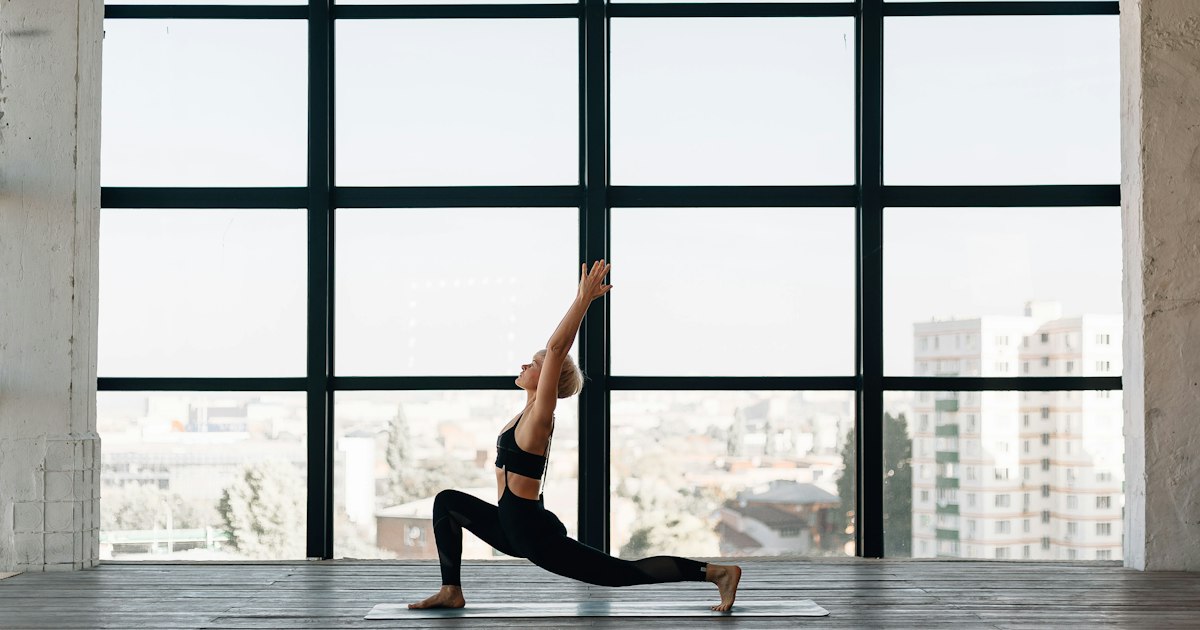
Photo: Dmitriy Frantsev on Unsplash.


 English
  German