
Most leaders I work with don’t come to coaching because they’re failing. They come because something that used to work — doesn’t anymore.
The calendar is full. The team is performing. Results are there. And yet there’s a low-level tension that doesn’t go away — a sense of running on fumes while still showing up, still delivering, still being “fine.”
I know that feeling. Not just from my clients — from myself.
- Real resilience isn’t a wellness topic — it’s the capacity to stay capable under uncertainty, and it’s trainable
- Leaders under pressure often reach for more structure and control, which reduces flexibility and eventually breaks the system
- The skill that matters most: tolerating the gap between question and answer without rushing to close it
- Four small daily interventions help: give pressure room, delay the solution search, monitor your inner voice, use your own history as evidence
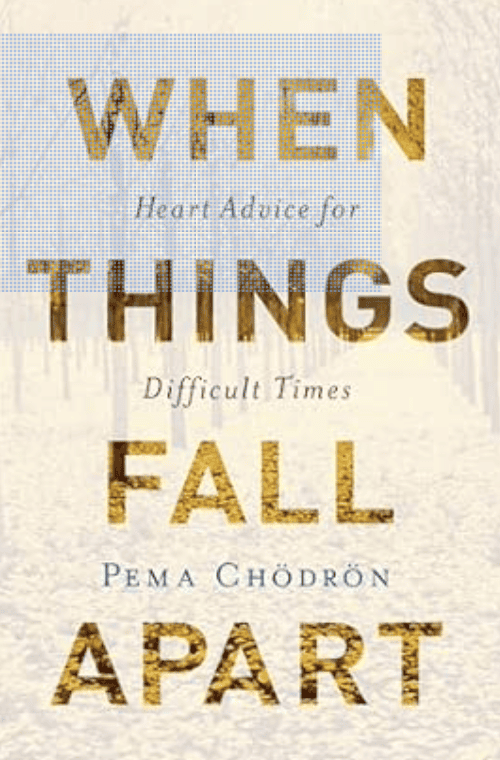
That’s what brought me to a book that had nothing to do with business: When Things Fall Apart by Pema Chödrön. Buddhist nun. No frameworks, no actionable strategies. And still — one of the most useful things I’ve read in years. It challenged me. And it helped me.
Resilience for leaders isn’t a wellness topic
The word “resilience” gets misused constantly. In corporate contexts it tends to show up alongside mindfulness apps, stress management workshops, and the vague instruction to “take care of yourself.” That’s not wrong — but it misses the point.
Real resilience for leaders means something more specific: the capacity to stay capable under uncertainty. Not despite pressure — inside pressure. That’s a skill, not a personality trait. And it can be built.
What I keep seeing in my coaching work: leaders under sustained pressure try to solve the problem with the same tools that created it. More structure. More control. More discipline. The pressure rises. The flexibility drops. And eventually, the system breaks.
What a Buddhist nun has to do with leadership
Chödrön writes about groundlessness — that feeling of the floor disappearing beneath you. She doesn’t offer a fix. She offers something harder and more useful: the idea that the instinct to immediately close every open question, to control every uncertain outcome, is exactly what creates suffering.
Her counterproposal sounds almost too simple: stay with the not-knowing. Don’t reach for solid ground before you’ve actually felt where you are.
That’s not a spiritual practice. That’s a leadership competency.
The leaders who handle uncertainty best aren’t the ones with the fastest answers. They’re the ones who can tolerate the moment between question and answer — without panicking, performing, or shutting down. That capacity is trainable. Most leadership development never touches it.
4 things that actually help when you’re under pressure
These aren’t programs. They’re small interventions — directly into the daily reality of a leader.
🔹 Give the pressure room instead of working it away. After a hard meeting: two minutes. No next task. Just sit with what’s there. This isn’t a luxury — it’s nervous system regulation. It changes what you do next.
🔹 Interrupt the solution search — briefly. Not every open question needs an answer right now. “I’ll come back to this tomorrow” is not avoidance. It’s protecting the decision from the worst version of your brain.
🔹 Check how you talk to yourself when things go wrong. Most leaders would never speak to a team member the way they speak to themselves under pressure. That inner voice costs energy. It’s not a strength — it’s a drain.
🔹 Use your own history as data. Write down three situations where a forced or unexpected change ultimately brought something better. Not as a motivational exercise — as evidence for your nervous system that uncertainty has a track record of being survivable.

Leadership coaching Berlin: when external perspective matters
Not every phase can be navigated alone. Sometimes the most effective thing a leader can do is bring in someone who sees the pattern from outside — not to give advice, but to create clarity.
I’m Niv Nicolas Nowbakht — Business & Leadership Coach based in Berlin, working bilingually in German and English with leaders and teams across the DACH region. I’ve been doing this for over 11 years. My background combines communication science with systemic coaching — which means I work with what leaders say, how they say it, and what’s underneath both.
I work with individual leaders navigating transitions, pressure, or a sense that their current approach has hit its ceiling. And with organisations that want to build resilience into their leadership culture — not as a one-off workshop, but as something that sticks.

Niv Nicolas Nowbakht
Business & Leadership Coach, Berlin · 11+ years of experience · Communication Science background
Resilience keeps you steady. It doesn’t tell you which part of your leadership is carrying more than it should.
Take the Impact Leader Score — 12 statements, about 3 minutes.
Want to find out if coaching is the right next step for you?
No sales call. A real conversation about where you are and what you’re dealing with.
Book a free 30-minute Clarity Call directly in the calendar below.
Most people say: “It’s incredible how much this short call already helped.”



 English
  German